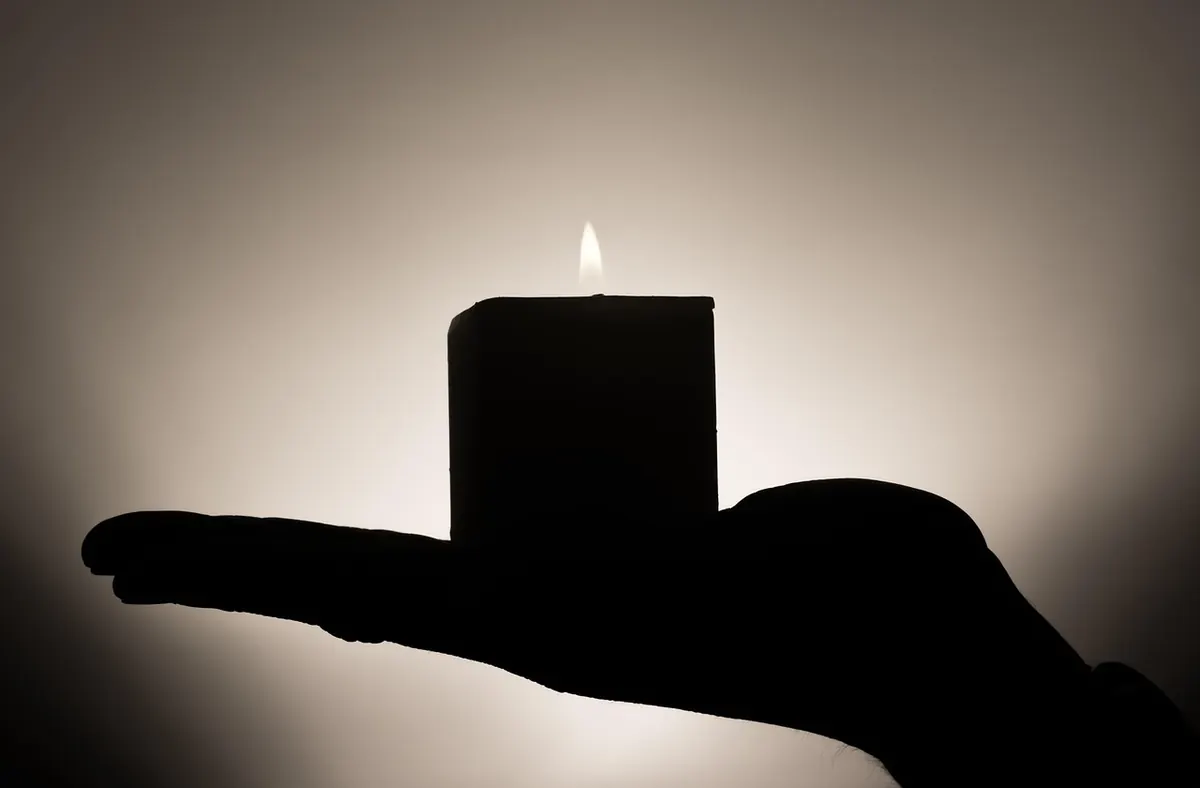
A taper that leans like it's had a long night. A votive that collapses into a wax puddle on a bookshelf. A pillar balanced on a saucer because nothing else in the house fits it. Most candle trouble starts before the wick is ever lit, with two objects that were never the same size in the first place.
Candles are made to a few conventional shapes, and holders are designed around those conventions. Once you know how each type burns and roughly how wide it is at the base, matching them becomes a five-second decision instead of a guess. Here's what each shape needs, and how to check a holder before you bring it home.
Start With the Socket, Not the Candle
Two candles can sit side by side on a shop shelf and differ by an eighth of an inch across the base. That eighth of an inch is the difference between a candle that stands straight and one that perches on a rim, wobbles, and tips the flame toward the glass.
So when you're shopping for holders, measure the opening, not the candle you have in mind. A ruler across the widest part of the socket tells you almost everything. Depth matters too: a taper socket that's too shallow won't hold a tall candle steady, and a deep, narrow well will refuse a fat pillar no matter how hard you push. Never force a candle into a socket. Wax doesn't compress, and glass cracks.
If you're working with a lantern, check the clearance as well. A lantern's base plate tells you which candles it was built for, and the gap between the flame and the top vent is what keeps the glass from overheating. Leave generous room above the flame; a tall taper in a short lantern will scorch the frame and blacken the glass.
Taper Candles: Tall, Thin, and Dependent on a Socket
Tapers can't stand up on their own. They're designed to be held, which is why candlesticks, chambersticks, wall sconces, and lantern spikes all exist. The standard taper base is about 7/8 inch across, and most candlesticks are built with a socket to match. Slimmer "dinner" or mini tapers run closer to 1/2 inch and need their own smaller holders; a mini taper in a standard socket will lean all evening.
What fits a taper
- A candlestick or chamberstick with a socket about 7/8 inch across.
- A taper holder with a center spike; you press the candle down onto the point.
- A wall sconce or lantern base with a spike or a deep socket.
- A holder with a gripper insert, useful if you switch between candle brands.
The candle should sink about half an inch into the socket and stand perfectly vertical. If it's loose, a small piece of holder putty or adhesive wax will steady it. If it's too tight, stop. Tapers burn with a narrow flame and a small wax pool, so they drip when they're crooked or sitting in a draft. Trim the wick to about a quarter inch and keep them away from air currents, and a good taper burns cleanly all the way down.
Pillar Candles: Wide, Self-Supporting, and Easy to Get Wrong
Pillars hold themselves up. Most are 2 to 4 inches across, with 3 inches being the common middle, and they don't need a socket at all. What they need is a level, heat-safe surface with a raised edge or a lip, because when the outer wall gets thin near the end of the burn, the pool can spill.
That's why pillar holders are almost always plates, trays, or pedestals rather than cups. A pillar sitting on a wide decorative plate looks intentional. A pillar wedged into a snug cup looks fine until the wax expands with heat, the glass cracks, and the flame runs short of air. If you have a holder with a center spike, push it into the base of the candle for stability; if the candle rocks on the spike, the spike is doing more harm than good and you should use the flat plate alone.
Pillars burn down the middle and leave a wax wall, which is normal. Drafts make them tunnel unevenly, so rotate the candle a quarter turn each time you light it. Keep the pool clear of match heads and wick trimmings, and never let a pillar burn in a holder narrower than its base.
Votives: The Candle That Must Live in a Cup
A votive is made to melt completely. That's the whole point of it, and it's why a votive on a bare plate becomes a puddle within an hour. Votives run roughly 1 1/2 to 2 inches across and 2 to 3 inches tall, and they belong inside a cup, well, or glass that catches every drop of wax.
Sizing the cup
The ideal votive holder is only slightly wider than the candle, maybe an eighth of an inch of play, with a flat bottom so the candle sits level. In a cup that's much too wide, the votive slides, the wick tilts, and the flame leans toward one side of the glass. In a cup that's too shallow, the flame sits right at the rim and heats the edge, which is uncomfortable to handle and hard on the glass.
Votive cups get genuinely hot, so set them on a coaster or trivet rather than a lacquered table, and let them cool completely before you move them. Lanterns with votive wells are a good pairing: the glass shields the flame from drafts, which is exactly what an open pool of wax wants.
Tealights: Standardized Size, Real Heat
Tealights are the most uniform candle you can buy, usually about 1 1/2 inches across and 3/4 inch tall, sitting in their own metal cup. That cup is not packaging. It's the holder, and it's what keeps the melted wax contained. A tealight dropped into a well that fits it will burn neatly for a few hours; the same tealight left bare on a wooden shelf will leave a scorch ring, because aluminum passes heat straight through to whatever is underneath.
Look for holders with a flat-bottomed well roughly 1 1/2 to 1 5/8 inches across and a little rim to keep the cup from sliding. Avoid wells with sloped or rounded sides; a tealight set into a curve sits crooked, and crooked burns unevenly. Never stack two tealights, and never drop a tealight into a deep votive cup where it will be hard to reach and easy to forget.
The Four Sizes at a Glance
- Taper: base about 7/8 inch. Needs a socket, spike, or gripper. Mini tapers around 1/2 inch need their own holders.
- Pillar: 2 to 4 inches across, commonly 3. Stands on a plate, tray, or pedestal, never in a tight cup.
- Votive: 1 1/2 to 2 inches across. Must burn inside a cup or well that catches the melt.
- Tealight: about 1 1/2 inches across, 3/4 inch tall. Needs a flat well or a holder with a base and rim.
- Floating candles: short and wide, made for a bowl of water. They don't belong in a socket at all.
A Two-Minute Sizing Routine
Before you buy another holder, measure the opening across the top and note the depth. If you're shopping in person, bring one candle of each type you use, or keep the diameters in a note on your phone. Test-fit a single holder at home before committing to a set of six, and favor holders with removable inserts or grippers if you like to change candles often.
Then, once everything matches, treat the setup with respect. Trim wicks to about a quarter inch, snuff rather than blow, keep candles away from drafts, curtains, and anything that can catch, and never leave a flame burning in an empty room or within reach of children and pets. Let holders cool before you move them, and store candles flat so they don't warp into a shape no holder will accept. Match the size, and the rest is just lighting a wick.
Photo: kundennote_com / Pixabay